 Store
StoreThe Red Ribbon Project




History:
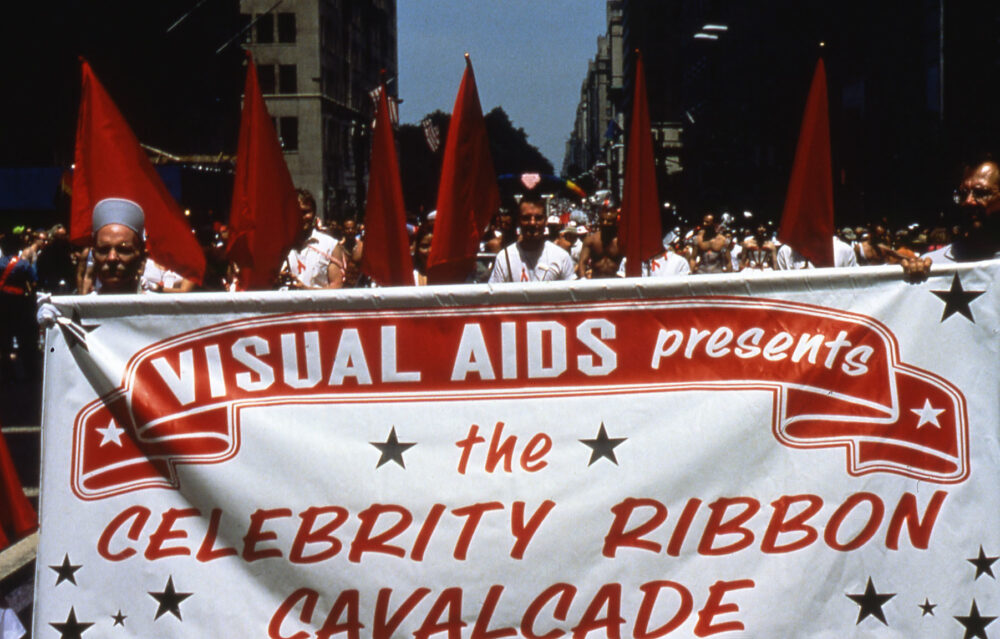
In 1991, a group of artists came together to create a meaningful symbol at the height of the AIDS crisis—to show support and compassion for those with AIDS and their caregivers. These artists were a part of the Visual AIDS Artists' Caucus and what they created was titled "The Ribbon Project", better known today simply as the Red Ribbon.
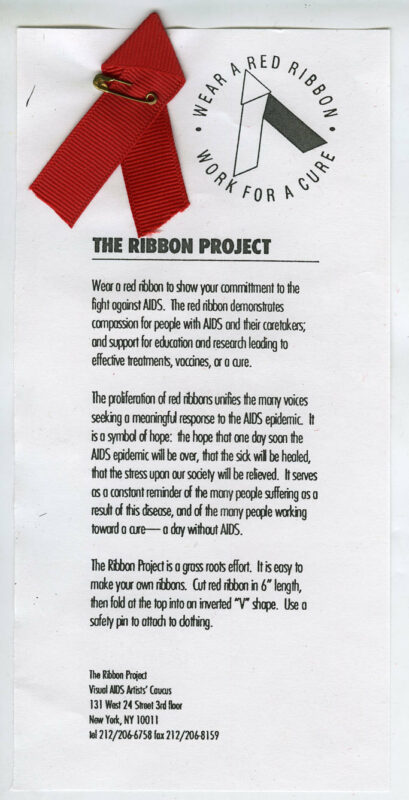
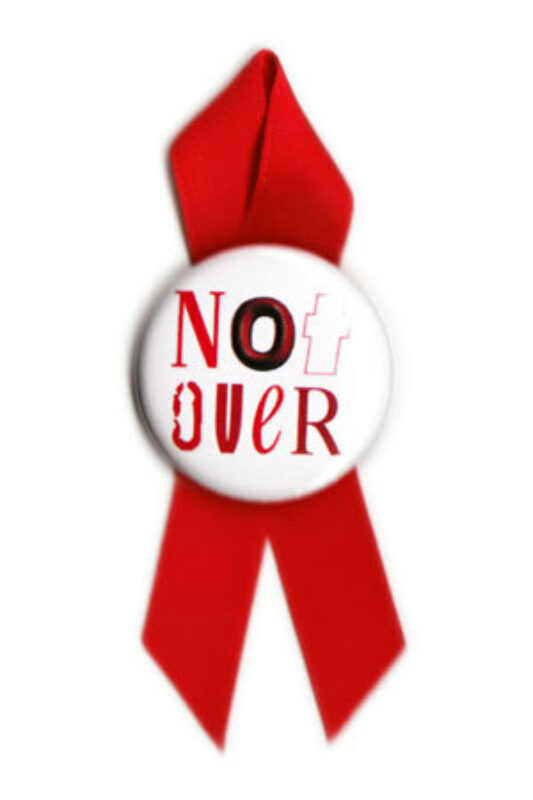
Through a series of meetings in April and May of 1991, and using the yellow ribbons as inspiration, the Red Ribbon was born. The color red was chosen for its "connection to blood and the idea of passion—not only anger, but love..." The ribbon format was selected in part because it was easy to recreate and wear. The original instructions were to "cut the red ribbon in 6 inch length, then fold at the top into an inverted 'V' shape. Use a safety pin to attach to clothing."
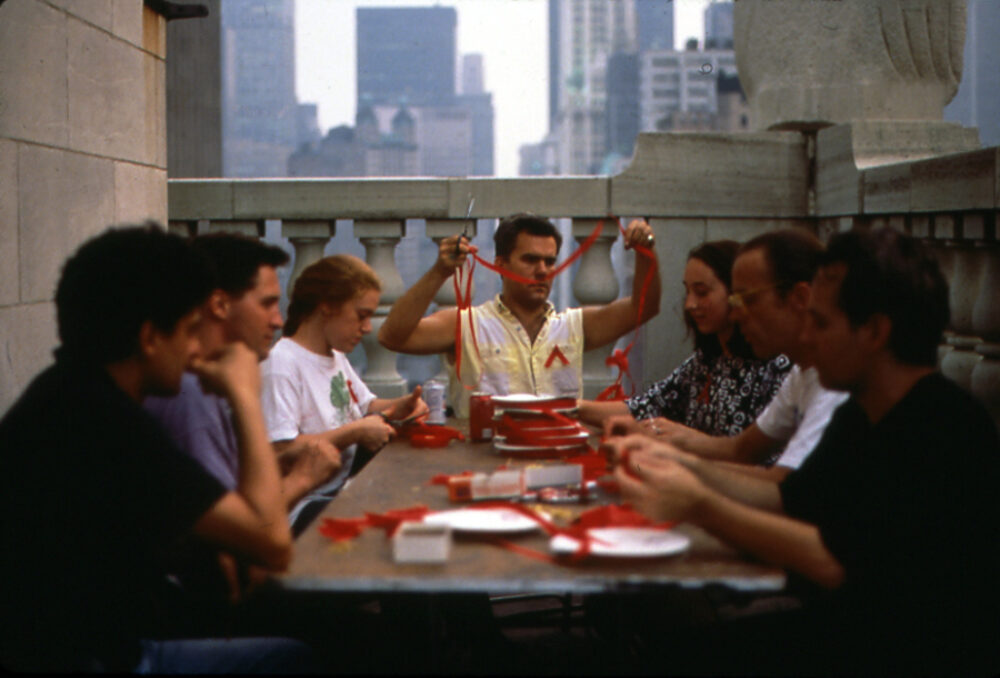
Red ribbons were created by the thousands at "ribbon bees"—gatherings of Artists' Caucus members, friends and supporters working together to cut, fold ribbons and pin ribbons for national distribution. When request became to large to handle, other groups are engaged to participate, including the formation of the Armory Ribbon Bee Project, organized by artists Hope Sandow and Frank Moore, in which homeless women at the Park Avenue Shelter were paid weekly to make tens of thousands of ribbons.
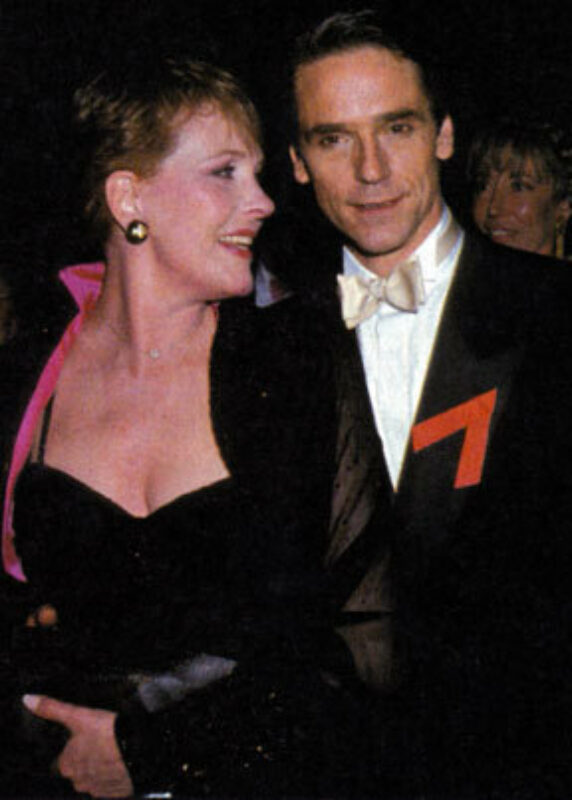
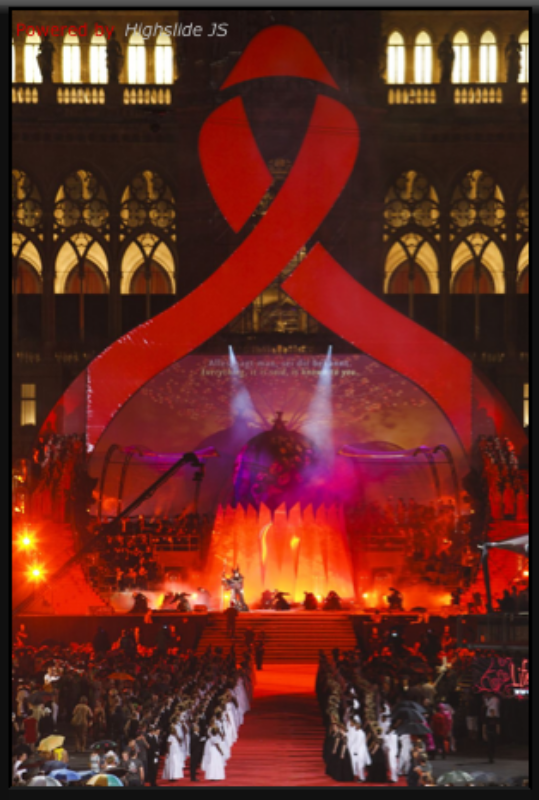
Visual AIDS partnered with Broadway Cares and Equity Fights AIDS in June 1991 to adorn guests and presenters at the 45th annual Tony Awards. The Tony Awards were chosen as a way to communicate the extent that this epidemic was affecting members of their own community—artists and performers. One of the first presenters to wear the iconic symbol was Jeremy Irons. The red ribbon quickly became renowned as an international symbol of AIDS awareness, and has been worn at the Oscars, Emmys and Grammys; celebrities, musicians, athletes, artists and politicians have worn the ribbon on talk shows, TV programs, movies, political conventions, sporting events and music videos.
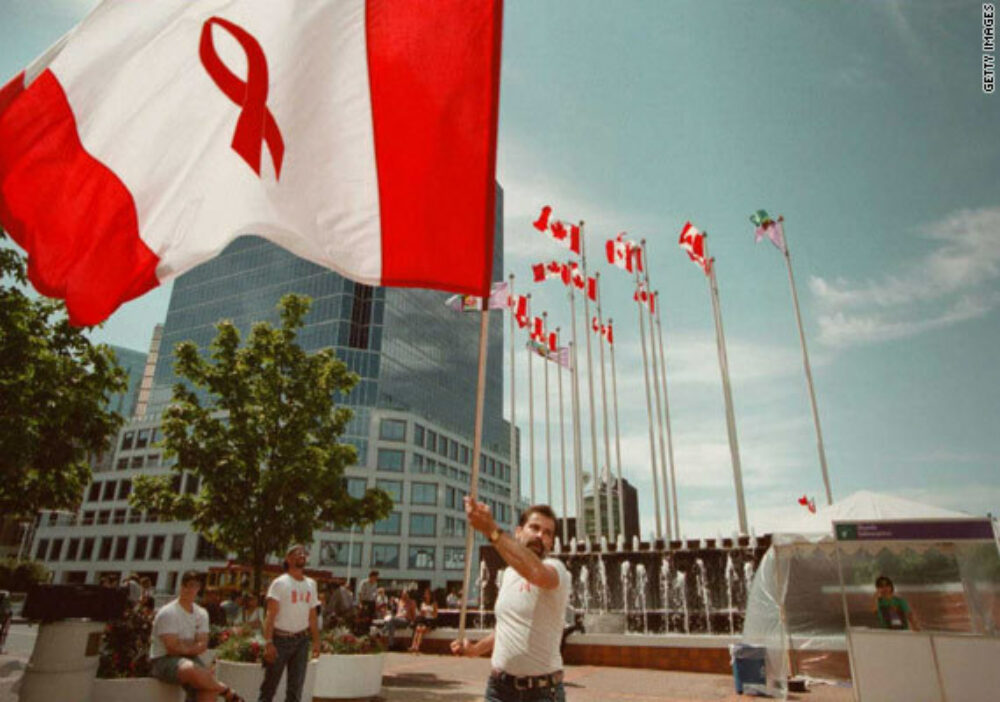
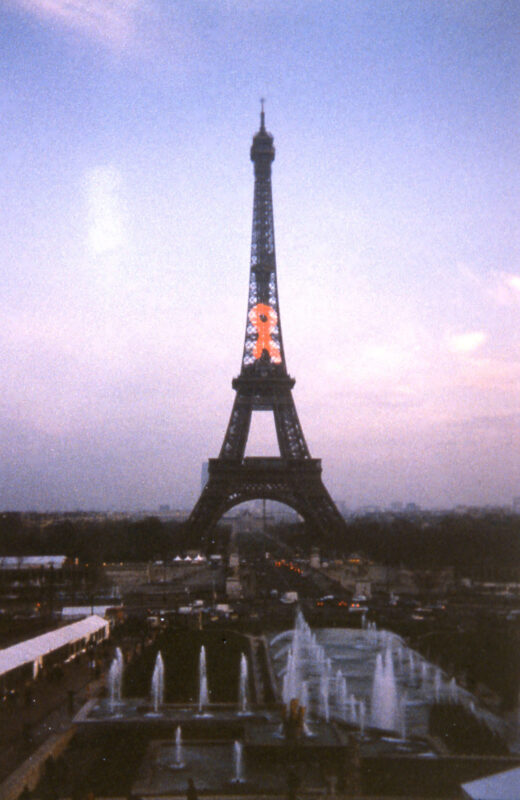
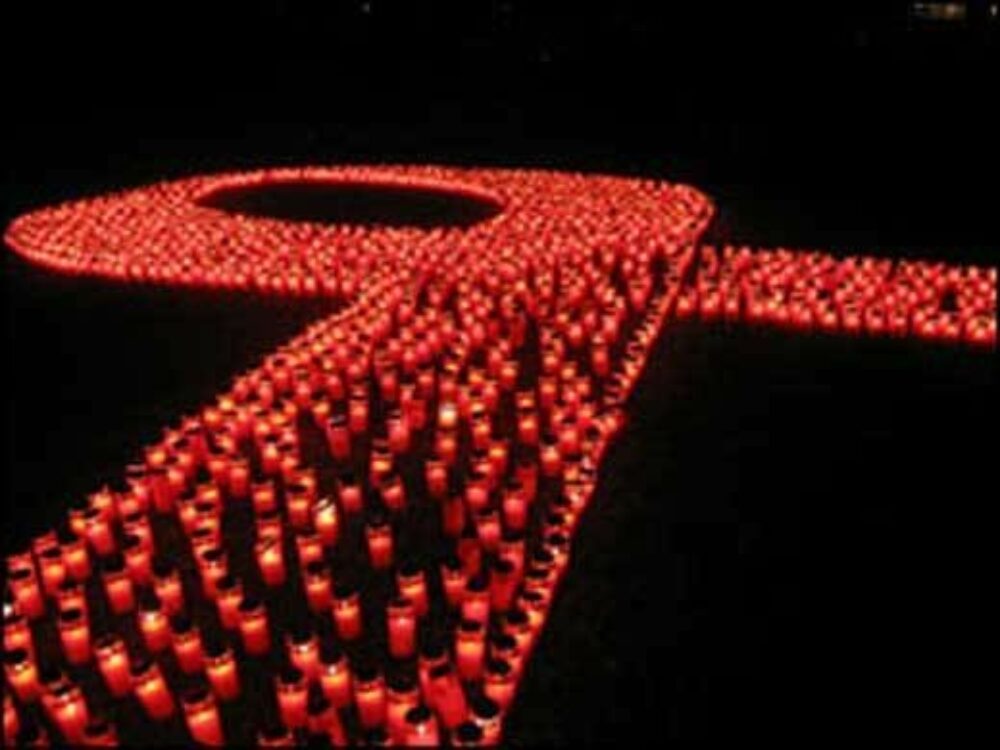
Today the red ribbon is an internationally recognized symbol of AIDS Awareness and a design icon. It has lead the way for many other color ribbons and awareness projects. Unlike some other commercial marketing campaigns, the red ribbon originally evolved as an artists/activist project.
Copyright:
The ribbon has never been copyrighted in the United States, to allow it to be worn and used widely as a symbol in the fight against AIDS. In creating the Ribbon Project, the Visual AIDS Artists' Caucus believed it was important to:
- Remain anonymous as individuals and to credit the Visual AIDS Artists Caucus as a whole in the creation of the Red Ribbon Project, and not to list any individual as the "creator" of the Red Ribbon Project.
- Keep the image copyright free, so that no individual or organization would profit from the use of the red ribbon.
- Use the Red Ribbon as a consciousness-raising symbol, not as a commercial or trademark tool.
Recognition:
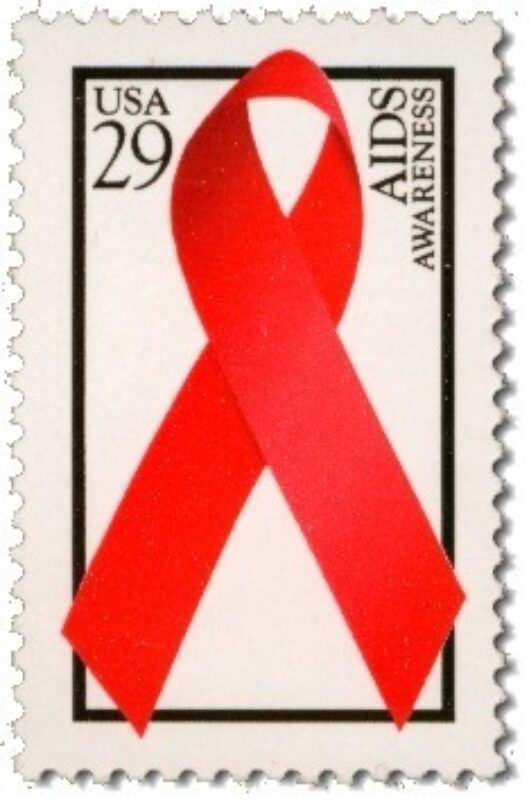
The Red Ribbon was the first "awareness" ribbon, later followed by many other colors and causes. The Red Ribbon has been used by many AIDS service organizations for its universal recognition and has been written about in several publications and articles. In 1993 a 29¢ Red Ribbon stamp was issued by the United States Postal Service. The Red Ribbon was honored by the CFDA in 1992 for its design and iconic power. In 1997, the Red Ribbon was included in the exhibition "Design for Life" at Cooper-Hewitt National Design Museum and "Humble Masterpieces" at Museum of Modern Art. In 2015 the Red Ribbon became part of the permanent collection at the Museum of Modern Art.
Selected Bibliography:
Episode 173: Awareness, 99 Percent Invisible (podcast), Producer Audrey Quinn, July 21, 2015
Red Ribbon: Celebrating 20 years of the iconic AIDS symbol, CNN, Amy Sadao, December 1, 2011
How a red ribbon conquered the world, BBC News, Tom Geoghegan, June 2, 2011
Why a red ribbon means AIDS, BBC News, Nigel Wrench, November 7, 2003
Where Have All the Ribbons Gone?, Body Positive, Laura Engle, January/February 2000
The Return of the Red Ribbon, New York Times, The City, Section 14, Sunday, April 10, 1994
The Year of the Ribbon, New York Times, Jesse Green, May 3, 1992
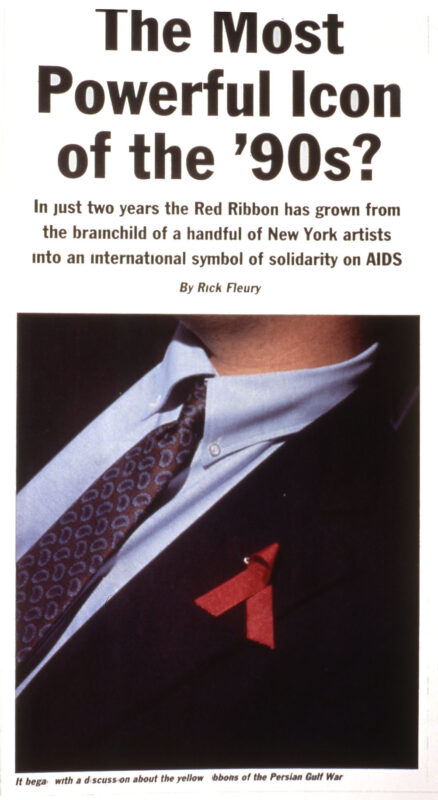
The most powerful icon of the '90s?; Rick Fleury, Brandweek, Nov 30, 1992
The Rise and Fall of Gay Culture, "The Kitschification of AIDS", Daniel Harris, Ballantine Books, 1999
Ribbon Culture: Charity, Compassion, and Public Awareness; Sarah Moore, Palgrave Macmillan, 2008
Related Events
"Catalyst: Connecting Art and Social Justice" exhibition |
January 21–September 8, 2021 |
Visual AIDS & the Red Ribbon: Creating an Icon |
October 10, 2018 |